
How to Build a Bamboo House (Beginner to Advanced)
Introduction
Bamboo construction is one of the fastest-growing methods of sustainable housing worldwide. When properly designed, treated, and assembled, bamboo structures can last decades while offering high strength, flexibility, low environmental impact, and rapid construction speed.
This guide walks through the entire process — from planning and treatment to advanced structural techniques — allowing beginners to start small and progressively build more complex structures.
Looking for a reliable Looking for a reliable tool for Bamboo Construction?
Here are our top off-grid recommendations:
1. Planning the Project
Before construction begins, careful planning determines the durability and safety of the structure.
Key planning steps:
Select elevated, well-drained terrain,
Study wind direction and sun exposure,
Define building function (shed, cabin, house),
Choose structural system (post-and-beam, modular frame),
Plan roof overhangs for rain protection.
Well-planned bamboo houses often last two to three times longer than poorly planned ones.
2. Foundations and Elevation
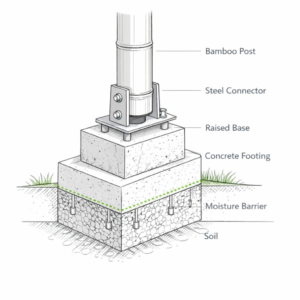
Bamboo must never be placed directly in soil because moisture and insects accelerate deterioration.
Recommended foundation methods:
Concrete footings with metal connectors,
Stone bases with steel anchoring rods,
Elevated platform systems (30–80 cm above ground).
Benefits of elevation:
Prevents moisture damage,
Improves airflow,
Reduces termite risk,
Increases structural lifespan.
3. Selecting and Treating Bamboo
Proper bamboo treatment is essential for durability.
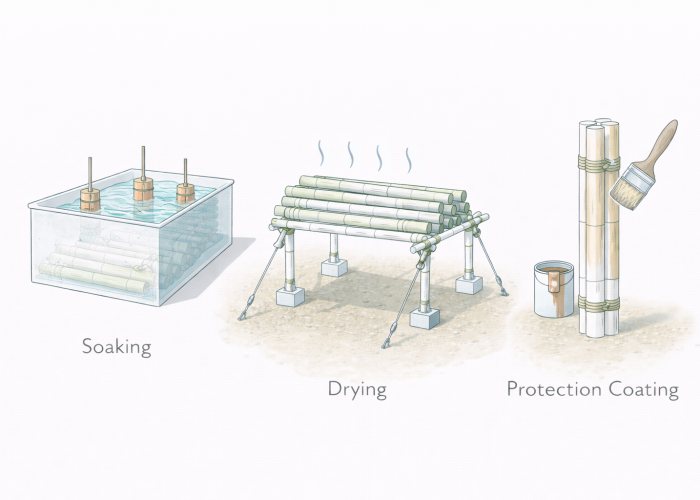
Basic treatment steps:
Harvest mature bamboo (3–5 years old),
Soak in preservation solution (borax/boric treatment or similar),
Dry with airflow circulation (not direct sun),
Apply protective sealant or natural oil.
Correct treatment can extend bamboo life from 3–5 years to 25+ years.
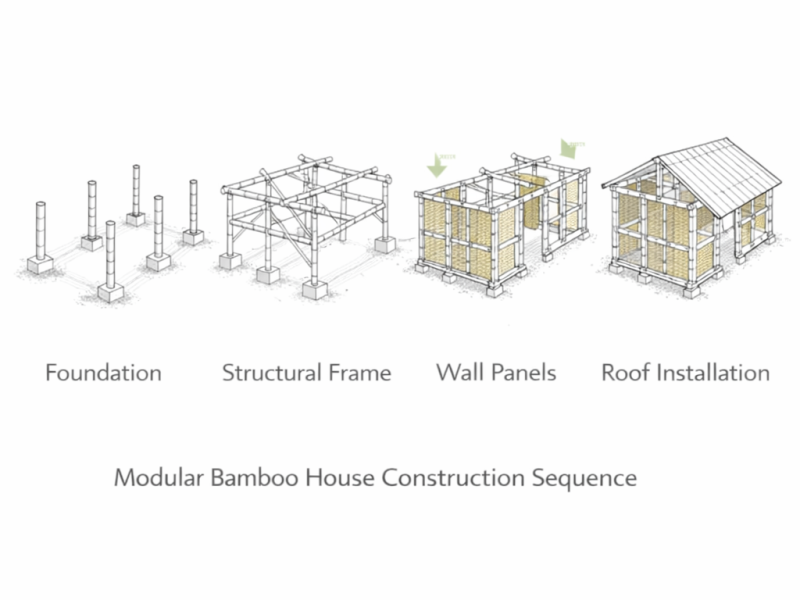
4. Structural Frame Construction
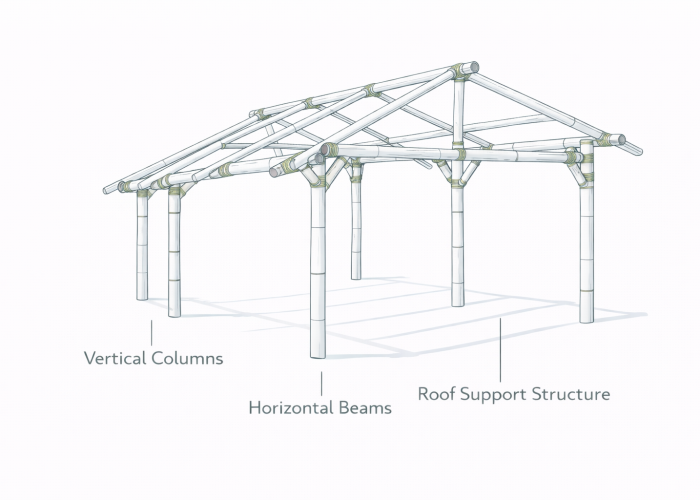
The most common bamboo structural system is post-and-beam framing.
Main components:
Vertical columns,
Horizontal beams,
Diagonal bracing,
Structural joints.
Important design rules:
Keep load paths continuous,
Add triangulation for stability,
Use reinforced joints at major connections,
Distribute loads evenly.
5. Structural Joints and Reinforcement
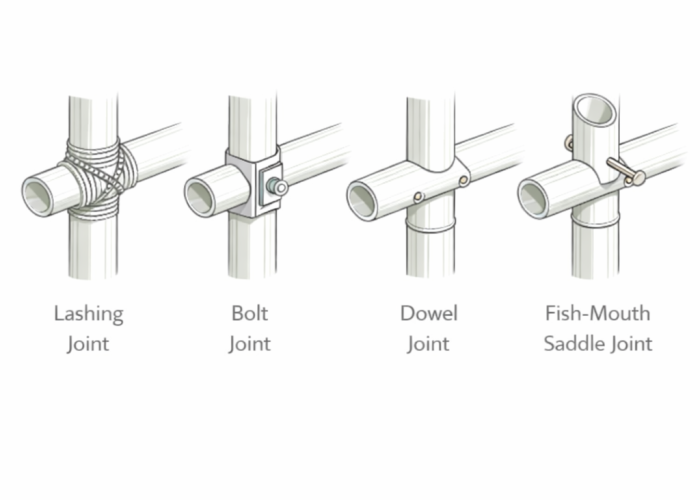
Common bamboo joints:
Rope or fiber lashing (traditional),
Bolt connections,
Wooden dowel joints,
Fish-mouth saddle joints.
Advanced reinforcement:
Bundled bamboo columns,
Steel rod internal reinforcement,
Hybrid bamboo-steel connectors.
Proper joint design is often more important than the bamboo size itself.
To power these devices, you need a reliable solar generator.
6. Wall Systems and Enclosures
Wall options include:
Woven bamboo panels,
Bamboo slat panels,
Earth plaster over bamboo mesh,
Composite bamboo boards.
Walls mainly serve:
Weather protection,
Ventilation control,
Thermal comfort.
Structural loads should remain in the main frame rather than walls.
7. Roof Design and Weather Protection
A well-designed roof dramatically increases building lifespan.
Important recommendations:
Large roof overhangs,
Ventilated roof structure,
Lightweight roofing materials,
Proper rainwater drainage.
Bamboo trusses allow long spans while maintaining structural efficiency.
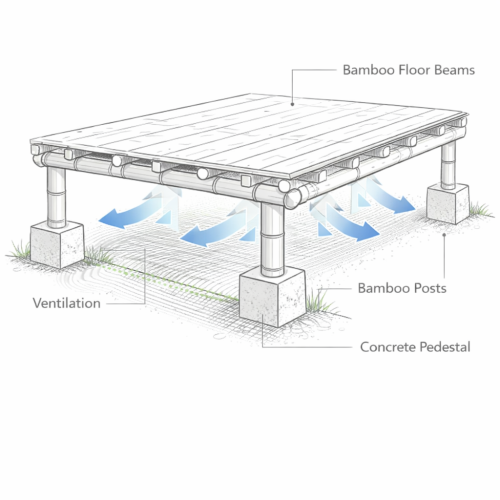
8. Floors and Elevated Platform Systems
Elevated bamboo floors:
Improve ventilation,
Prevent humidity accumulation,
Increase durability,
Improve thermal comfort.
Flooring materials:
Bamboo boards,
Wooden planks,
Composite panels.
9. Beginner → Intermediate → Advanced Construction Progression
Beginner Stage
Small pavilion or shed
Simple joints
Basic roof
Minimal walls
Intermediate Stage
Elevated platform
Treated bamboo frame
Wall panel systems
Improved joinery
Advanced Stage
Multi-room bamboo house
Engineered truss roof
Reinforced columns
Integrated solar and water systems
10. Common Mistakes to Avoid
Using untreated bamboo,
Placing bamboo directly in soil,
Insufficient roof overhang,
Weak joints without reinforcement,
Poor ventilation planning,
Lack of structural. triangulation
Avoiding these errors significantly increases structure lifespan.
Thousands of people are already using Tools for Bamboo Construction to live off-grid.
Explore the most trusted models below:
Final Thoughts
Bamboo construction combines engineering efficiency, ecological sustainability, and rapid build capability, making it one of the most promising housing solutions for the coming decades.
With proper treatment, structural planning, and environmental protection, bamboo houses can be safe, durable, and highly resilient.
Affiliate Disclosure
Some links on this page are affiliate links.
This means we may earn a small commission if you purchase through them, at no extra cost to you.
This helps support the Bambucracia project.
“The future grows here.”
Practical guides for sustainable living.
Best Solar Generators for Off-Grid Living (2026 Guide) ☀️
Living off-grid is no longer just a dream. With modern solar generators, you can power your home, cabin, bamboo house or eco-village with clean, silent and renewable energy.
In this guide…

How to Filter Rainwater for Off-Grid Living (2026 Guide) 💧
Rainwater is one of the most powerful resources for sustainable and off-grid living. Rainwater can be transformed into clean, safe and drinkable water for homes, bamboo houses and eco-villages.
This guide explains …
“How to Live Off-Grid in 2026”
— The Complete Guide 🏕
Living off-grid in 2026 is no longer just about escaping the city.
It is about building a resilient, sustainable and independent lifestyle in a world that is changing fast.
This guide shows …
Bambucracia - “Where nature becomes structure.”
Bambucracia promotes sustainable living through bamboo architecture, eco-villages, and regenerative design solutions.
Community:
E-mail: contato@bambucracia.com.br
© 2026 Bambucracia — Sustainable Solutions.
Reproduction in whole or in part is prohibited without authorization.